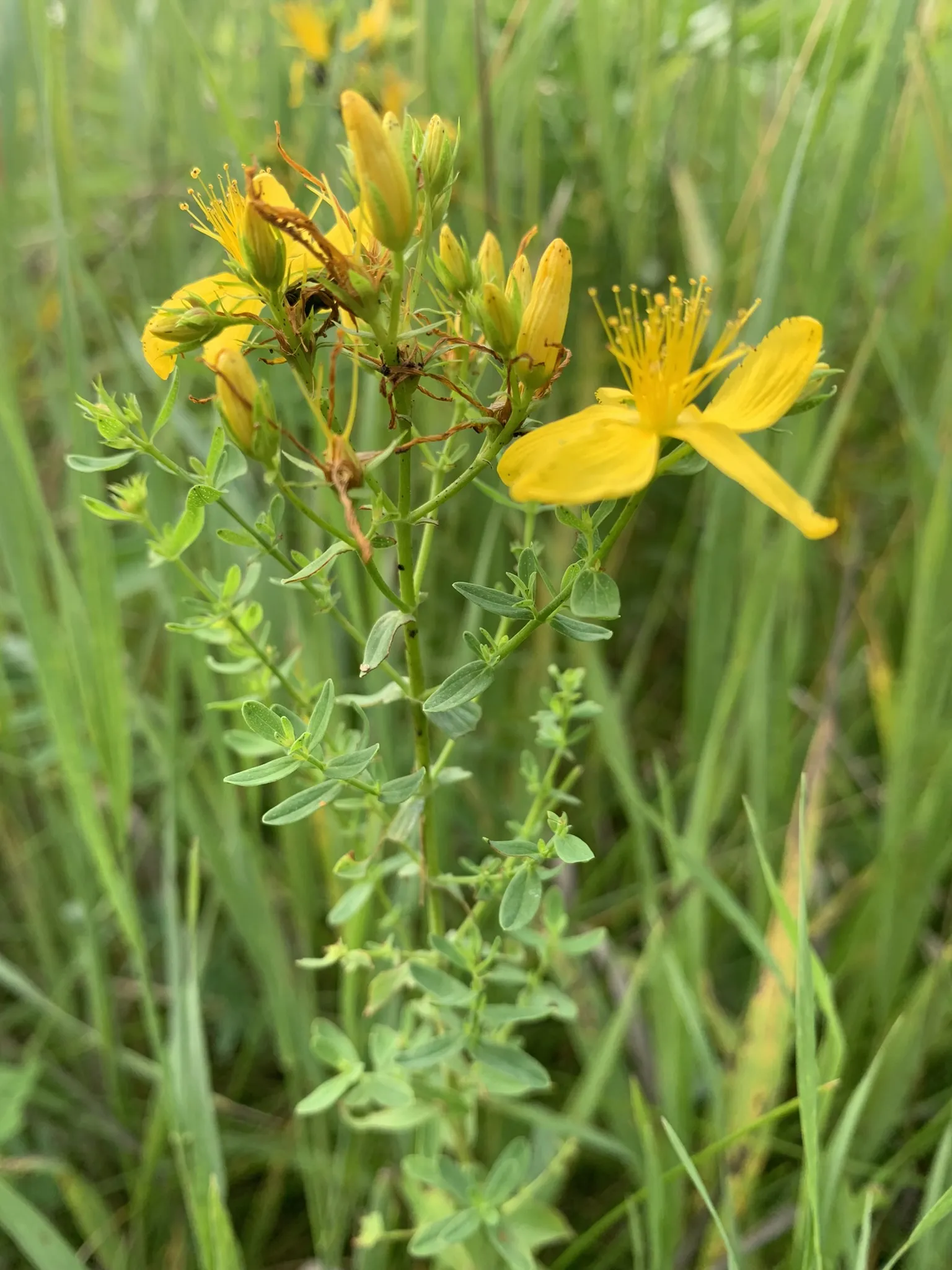
St. John’s Wort
Family: Hypericaceae - Genus: Hypericum - Species: H. perforatum
Other names: Goatweed, Klamath Weed, Rosin Rose, Tipton Weed
Quick facts
- Uses
- Medicinal
- Tea
- Edible parts
- None
- Type
- perennial herb
- Flowers
- Jun–Sep
- Height
- 30–100 cm
- Native to
- Europe and Asia
- Habitat
- meadows, roadsides, dry fields
| Month | Observations |
|---|---|
| January | 1 |
| February | 0 |
| March | 0 |
| April | 3 |
| May | 59 |
| June | 1121 |
| July | 2009 |
| August | 735 |
| September | 222 |
| October | 55 |
| November | 17 |
| December | 2 |
St. John's wort bursts into bright yellow flowers around St. John's Day, 24 June, which gave it its name. It came over from Europe and now grows in meadows, on roadsides and in dry fields. It's toxic to grazing animals, and in some places it's a serious weed.
How to spot it
- Leaves are small, oblong and grow in pairs without stalks. Hold one up to the light and you'll see tiny clear dots, as if someone poked it with a pin. That's the perforatum in its name.
- Flowers are bright yellow, about 2 cm across, with five petals and a burst of long stamens. Look closely and you'll see tiny black dots along the edges of the petals.
- Crush a flower bud and your fingers turn red-purple. That's hypericin, one of the plant's active compounds.
- Stems are branched, with two raised lines running along them.
What it's good for
St. John's wort is one of the best-studied herbal medicines. Clinical trials show it can help mild to moderate depression about as well as standard antidepressants.
The flowers soaked in oil make a deep red oil that has long been used on bruises, burns and nerve pain.
A serious warning
This plant interacts with a lot of medicines. It can stop the birth control pill, blood thinners, HIV drugs and transplant drugs from working properly. Taken with antidepressants, it can cause a dangerous reaction. Talk to a doctor before you use it.
Gallery
Yellow, five-petalled flowers Flower cluster with long stamens Plant in bloom beside a woodpile Stems with small, opposite leaves Flowers and buds Flowers among grass
Where it grows
Each hexagon shows how many times St. John’s Wort has been recorded there, from herbarium specimens, surveys and iNaturalist photos. Gaps can mean nobody has looked, not that the plant is absent.