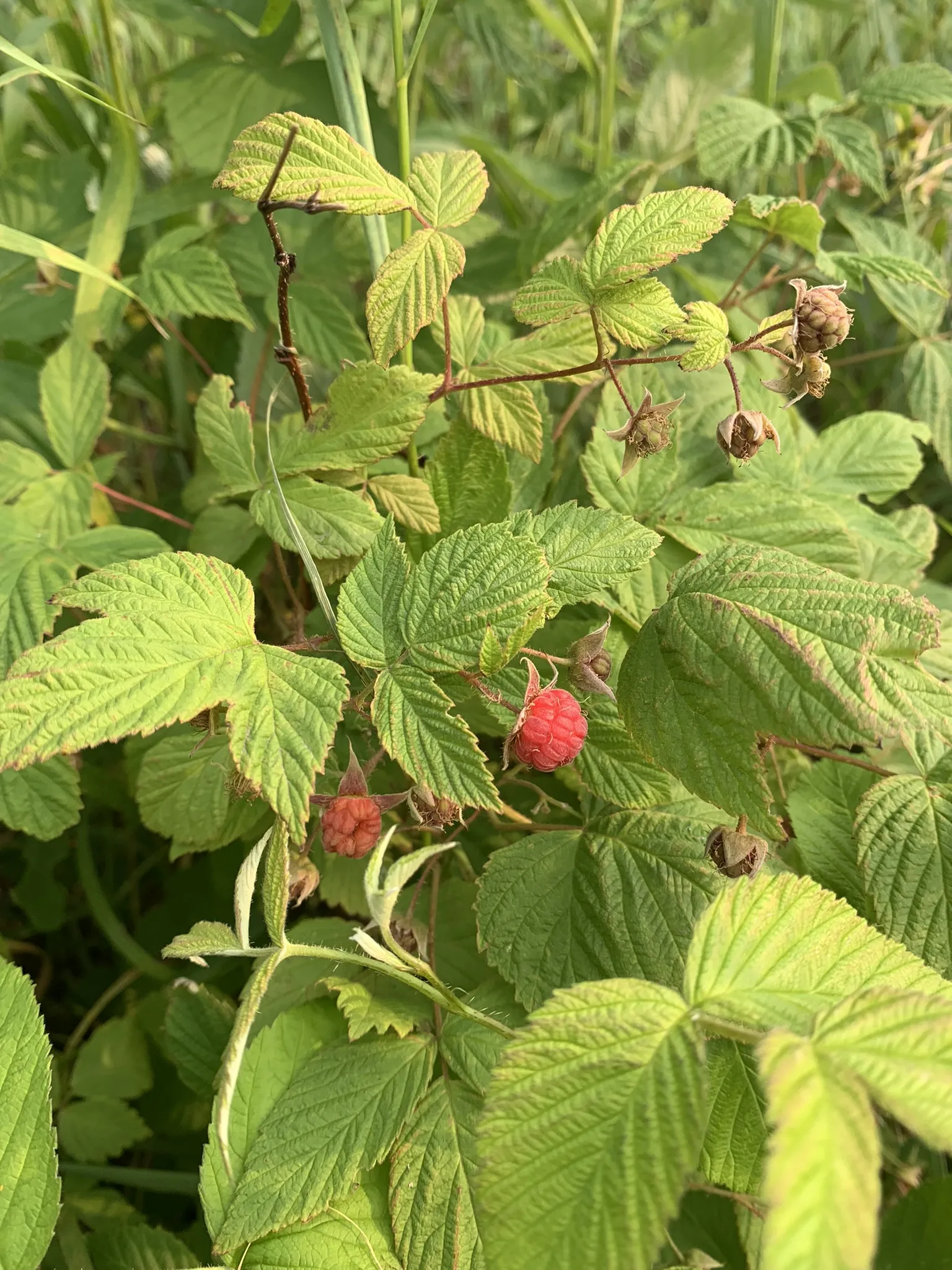
Raspberry
Family: Rosaceae - Genus: Rubus - Species: R. idaeus
Quick facts
- Uses
- Edible
- Medicinal
- Tea
- Wildlife
- Edible parts
- fruit, leaf
- Type
- perennial shrub
- Flowers
- May–Aug
- Height
- 1–2 m
- Native to
- Northern Hemisphere
- Habitat
- woodland edges, clearings, thickets
| Month | Observations |
|---|---|
| January | 0 |
| February | 0 |
| March | 0 |
| April | 2 |
| May | 25 |
| June | 193 |
| July | 141 |
| August | 21 |
| September | 11 |
| October | 2 |
| November | 1 |
| December | 0 |
Wild red raspberries grow in thickets at the edges of woods, in clearings and along old fences. The berries are smaller than the ones in the shop, but they have far more flavour, and finding a patch in July is one of the joys of summer.
How to spot it
- Canes are woody stems covered in small, thin prickles. Each cane lives for two years: leaves in the first year, fruit in the second.
- Leaves are made of three to five toothed leaflets, green on top and silvery white underneath.
- Flowers are small and white with five petals, in late spring.
- Berries slip off a white core when ripe, leaving a hollow cap. That's the easiest way to tell a raspberry from a blackberry.
What it's good for
The berries, of course. Eat them straight off the cane, or make jam, pies and syrup if any make it home.
The leaves make a mild, slightly astringent tea that's an old remedy for diarrhoea and sore throats. Many midwives recommend raspberry leaf tea late in pregnancy to prepare for labour, but check with your doctor before you try it.
Birds and animals eat the berries too, and bees love the flowers.
Its relatives
- Blackberries keep their core when you pick them, so the berry is solid.
- Black raspberries have dark purple berries and canes with a whitish, waxy coating.
All of them are edible.
Gallery
Ripe red berries among the leaves Leaves with pale, silvery undersides
Where it grows
Each hexagon shows how many times Raspberry has been recorded there, from herbarium specimens, surveys and iNaturalist photos. Gaps can mean nobody has looked, not that the plant is absent.