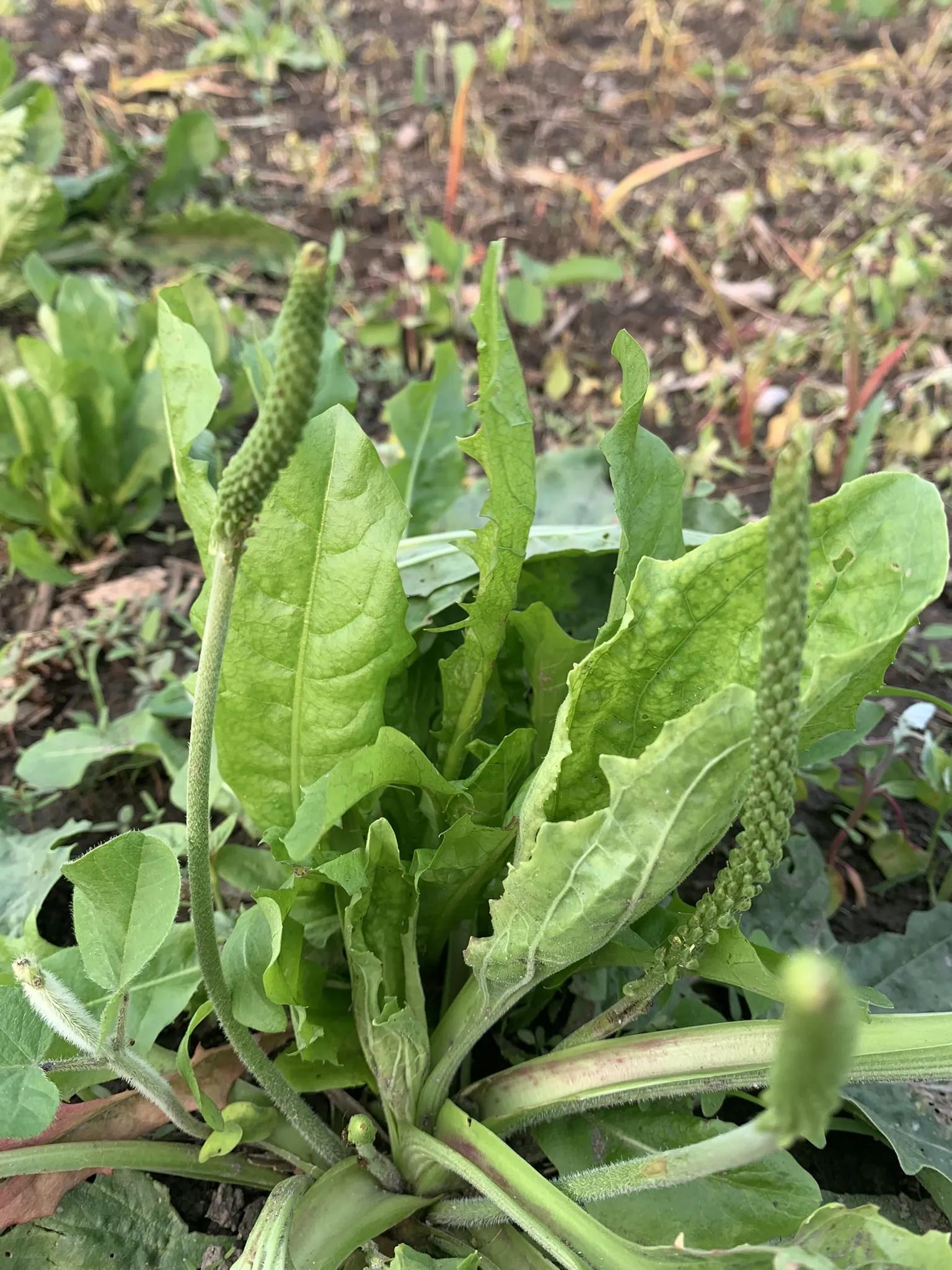
Plantain
Family: Plantaginaceae - Genus: Plantago - Species: P. major
Other names: Broadleaf Plantain, Common Plantain, Greater Plantain, White Man’s Foot
Quick facts
- Uses
- Edible
- Medicinal
- Tea
- Edible parts
- leaf, seed
- Type
- perennial herb
- Flowers
- Apr–Oct
- Height
- 10–30 cm
- Native to
- Europe and Asia
- Habitat
- lawns, paths, compacted soil
| Month | Observations |
|---|---|
| January | 3 |
| February | 3 |
| March | 5 |
| April | 32 |
| May | 27 |
| June | 135 |
| July | 239 |
| August | 132 |
| September | 61 |
| October | 24 |
| November | 17 |
| December | 4 |
Broadleaf plantain grows wherever people walk. It thrives in packed soil on paths, driveways and lawns, and it can stand being stepped on all day. It has nothing to do with the banana-like fruit of the same name.
When Europeans arrived in North America, plantain arrived with them. Some Indigenous peoples called it "white man's foot", because it seemed to appear wherever settlers went.
How to spot it
- Leaves grow in a flat rosette. They're broad and oval, with five to nine strong, parallel veins.
- Stringy veins: gently pull a leaf stalk apart and you'll see thin fibres stretch out, like celery strings.
- Flower spikes are thin and upright, covered in tiny greenish flowers that later turn into brown seeds.
What it's good for
Plantain is the forager's first-aid kit. Crush or chew a fresh leaf and put it on a bee sting, bug bite, nettle sting or small cut. It cools and soothes, and many people swear it helps draw out splinters.
Young leaves are good in salads or cooked. Older ones get stringy, so cook them or pull out the veins. The seeds are related to psyllium, the fibre supplement.
A tea of the leaves is an old remedy for coughs and an upset stomach.
Don't confuse it with
Narrowleaf plantain has long, narrow leaves with the same parallel veins. You can use it in exactly the same ways.
Gallery
Rosette of ribbed leaves with seed spikes
Where it grows
Each hexagon shows how many times Plantain has been recorded there, from herbarium specimens, surveys and iNaturalist photos. Gaps can mean nobody has looked, not that the plant is absent.