Horsetail
Family: Equisetaceae - Genus: Equisetum - Species: E. arvense
Other names: Field Horsetail, Common Horsetail, Snake Grass, Pewterwort, Scouring Rush, Shavegrass
Quick facts
- Uses
- Medicinal
- Tea
- Edible parts
- None
- Type
- perennial spore plant
- Flowers
- Does not flower
- Height
- 10–60 cm
- Native to
- Northern Hemisphere
- Habitat
- moist soil, ditches, field edges
Horsetail is a living fossil. Its relatives have been around for over 350 million years, and some of them once grew as tall as trees. Today's horsetail is much smaller, but it's just as hard to kill. Its roots run deep and spread far, so any piece left behind grows back.
It doesn't flower at all. It reproduces from spores, like ferns.
How to spot it
- In early spring, pale brown stems with a small cone on top pop up first. They release their spores and then wither.
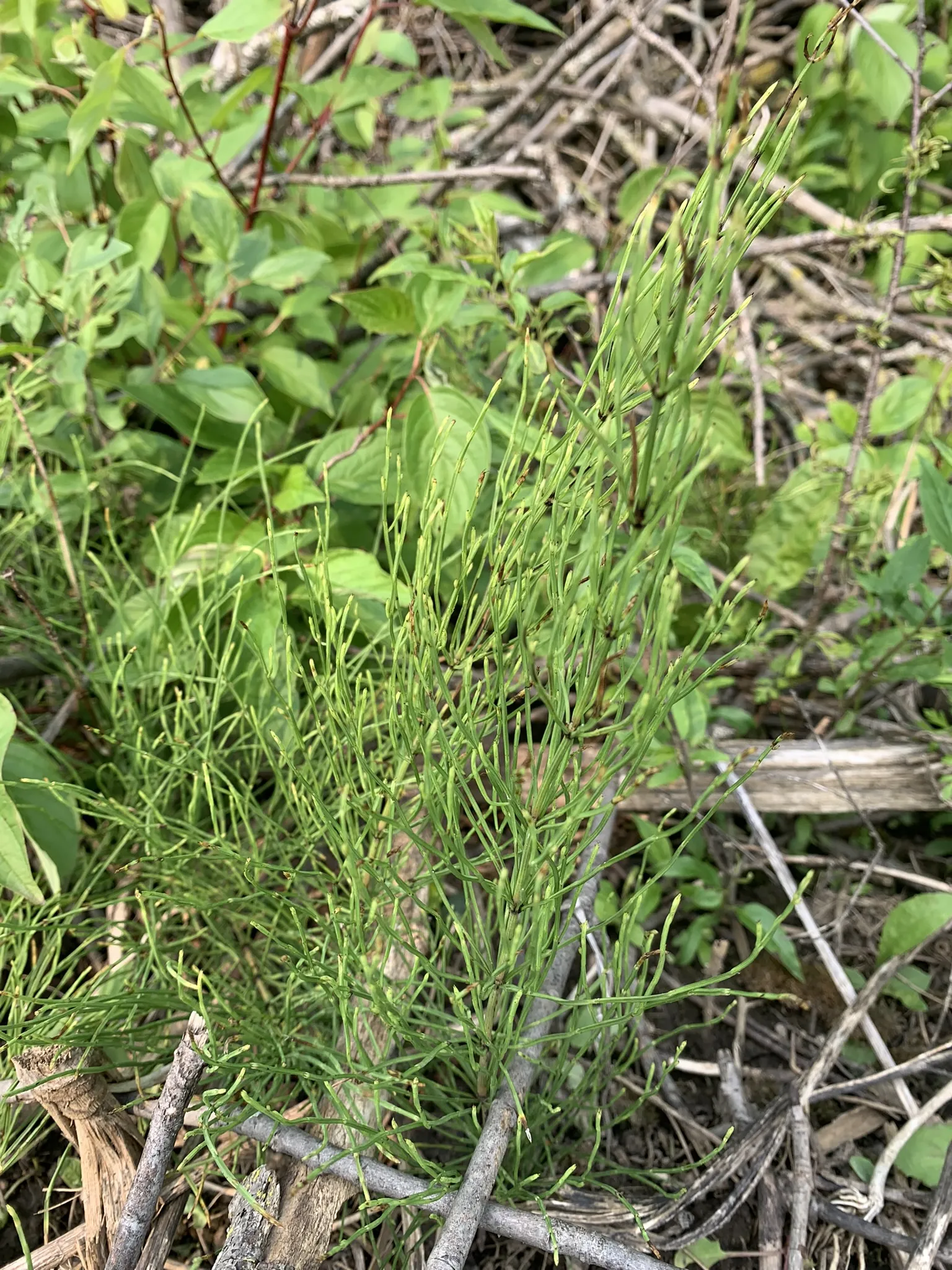
- Green stems follow, hollow and jointed, with rings of thin, needle-like branches. They look like a bottlebrush or a horse's tail.
- Joints pull apart with a little pop and fit back together like a toy.
- The stems feel rough, because they're full of silica.
What it's good for
That silica makes the stems gritty. People used bundles of horsetail to scrub pots and polish wood, which earned it the name "scouring rush".
Herbalists use a tea of the green stems as a diuretic and as a source of silica for hair, skin, nails and bones. It's meant for short-term use only.
Don't confuse it with
Marsh horsetail looks almost identical, grows in wetter ground and is toxic to livestock. Telling the two apart takes a close look and some experience.
Gallery
Jointed stems with whorls of thin branches Clump of horsetail at a woodland edge
Where it grows
Each hexagon shows how many times Horsetail has been recorded there, from herbarium specimens, surveys and iNaturalist photos. Gaps can mean nobody has looked, not that the plant is absent.