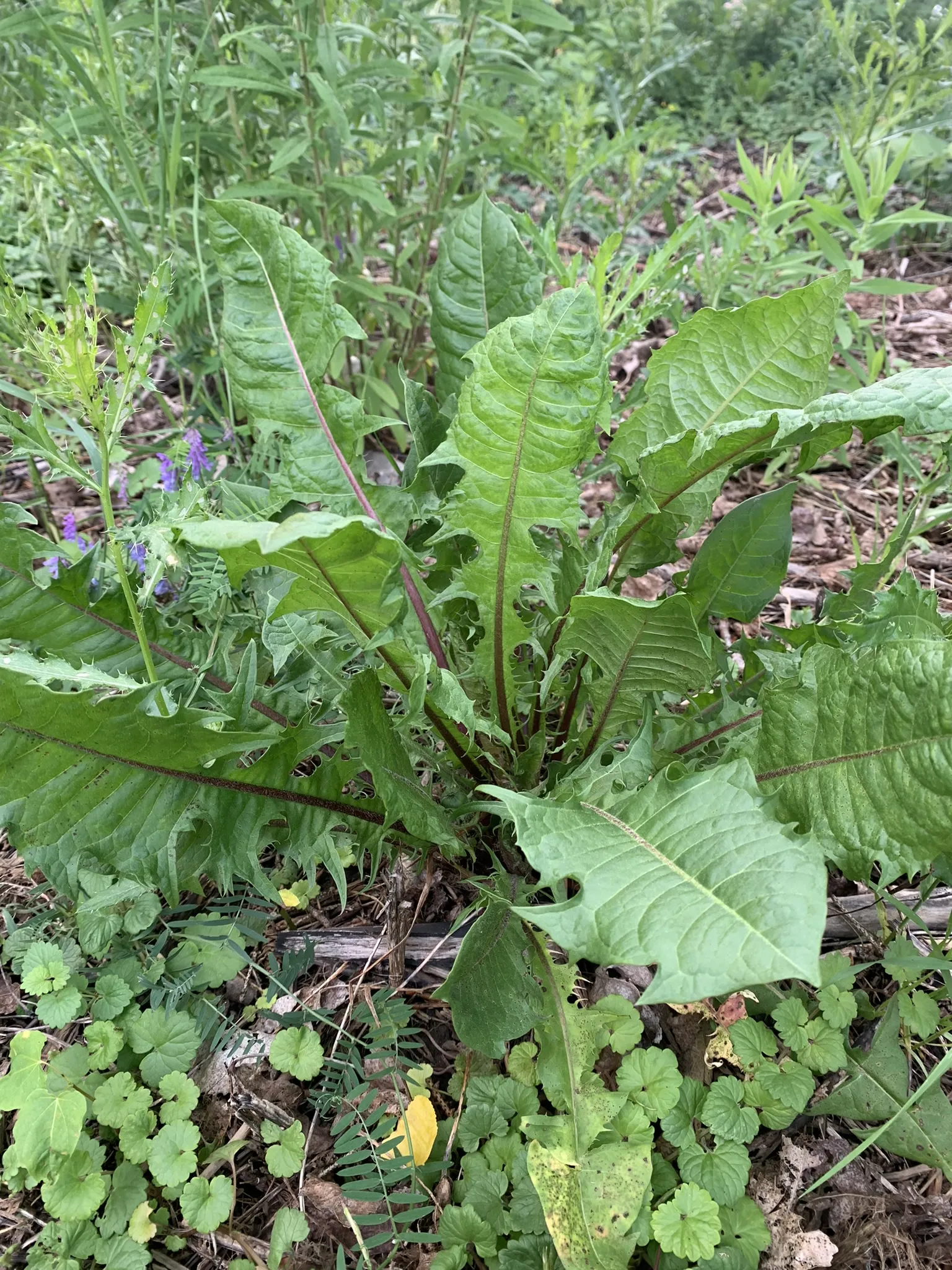
Dandelion
Family: Asteraceae - Genus: Taraxacum - Species: T. officinale
Other names: Blowball, Cankerwort, Lion’s Tooth, Piss-a-bed, Priest’s Crown, Puffball, Swine Snout, White Endive, Wild Endive
Quick facts
- Uses
- Edible
- Medicinal
- Tea
- Edible parts
- leaf, flower, root
- Type
- perennial herb
- Flowers
- Jan–Dec
- Height
- 5–45 cm
- Native to
- Europe and Asia
- Habitat
- lawns, fields, roadsides
| Month | Observations |
|---|---|
| January | 209 |
| February | 286 |
| March | 511 |
| April | 2008 |
| May | 1382 |
| June | 437 |
| July | 229 |
| August | 167 |
| September | 250 |
| October | 280 |
| November | 335 |
| December | 218 |
Dandelion might be the most familiar wild plant there is, and every part of it is edible. The name comes from the French dent de lion, "lion's tooth", after the jagged edges of its leaves.
Most people see it as a lawn weed. For bees, it's one of the first good meals of spring.
How to spot it
- Leaves all come from a rosette at ground level. They're smooth and hairless, with deep teeth that point back towards the centre.
- Flower stalks are smooth, hollow and leafless, with one flower each. Break one and white, milky sap comes out.
- Flowers are bright yellow and made of many small petals.
- Seed heads are the round, white "clocks" every child has blown on.
- The root is a thick, brown taproot that snaps if you don't dig carefully.
What it's good for
Pick young leaves in early spring for salads, before they turn bitter. Older leaves are better cooked. The flowers make fritters, syrup and dandelion wine. Roast and grind the root and you get a caffeine-free drink that tastes a bit like coffee.
The leaves are rich in vitamins A, C and K and in potassium. Herbalists use them as a diuretic and use the root as a bitter tonic for digestion and the liver.
Don't confuse it with
Catsear (false dandelion) looks very similar and is also edible. Dandelion leaves are smooth; catsear leaves are hairy. Dandelion stalks are hollow with one flower; catsear stalks are solid, wiry and often branched.
Gallery
Rosette of long, toothed leaves Close-up of the leaves
Where it grows
Each hexagon shows how many times Dandelion has been recorded there, from herbarium specimens, surveys and iNaturalist photos. Gaps can mean nobody has looked, not that the plant is absent.