Catnip
Family: Lamiaceae - Genus: Nepeta - Species: N. cataria
Other names: Catmint, Catswort, Catwort, Field Balm
Quick facts
- Uses
- Medicinal
- Tea
- Edible parts
- leaf, flower
- Type
- perennial herb
- Flowers
- Jun–Oct
- Height
- 30–90 cm
- Native to
- Europe and Asia
- Habitat
- field edges, roadsides, disturbed ground
| Month | Observations |
|---|---|
| January | 0 |
| February | 0 |
| March | 1 |
| April | 2 |
| May | 2 |
| June | 110 |
| July | 519 |
| August | 258 |
| September | 99 |
| October | 53 |
| November | 2 |
| December | 0 |
Most people know catnip because of what it does to cats. But people have grown it for centuries for themselves too, mainly as a calming tea before bed.
It's a member of the mint family from Europe and Asia, and it has escaped gardens to grow wild along roadsides and field edges.
How to spot it
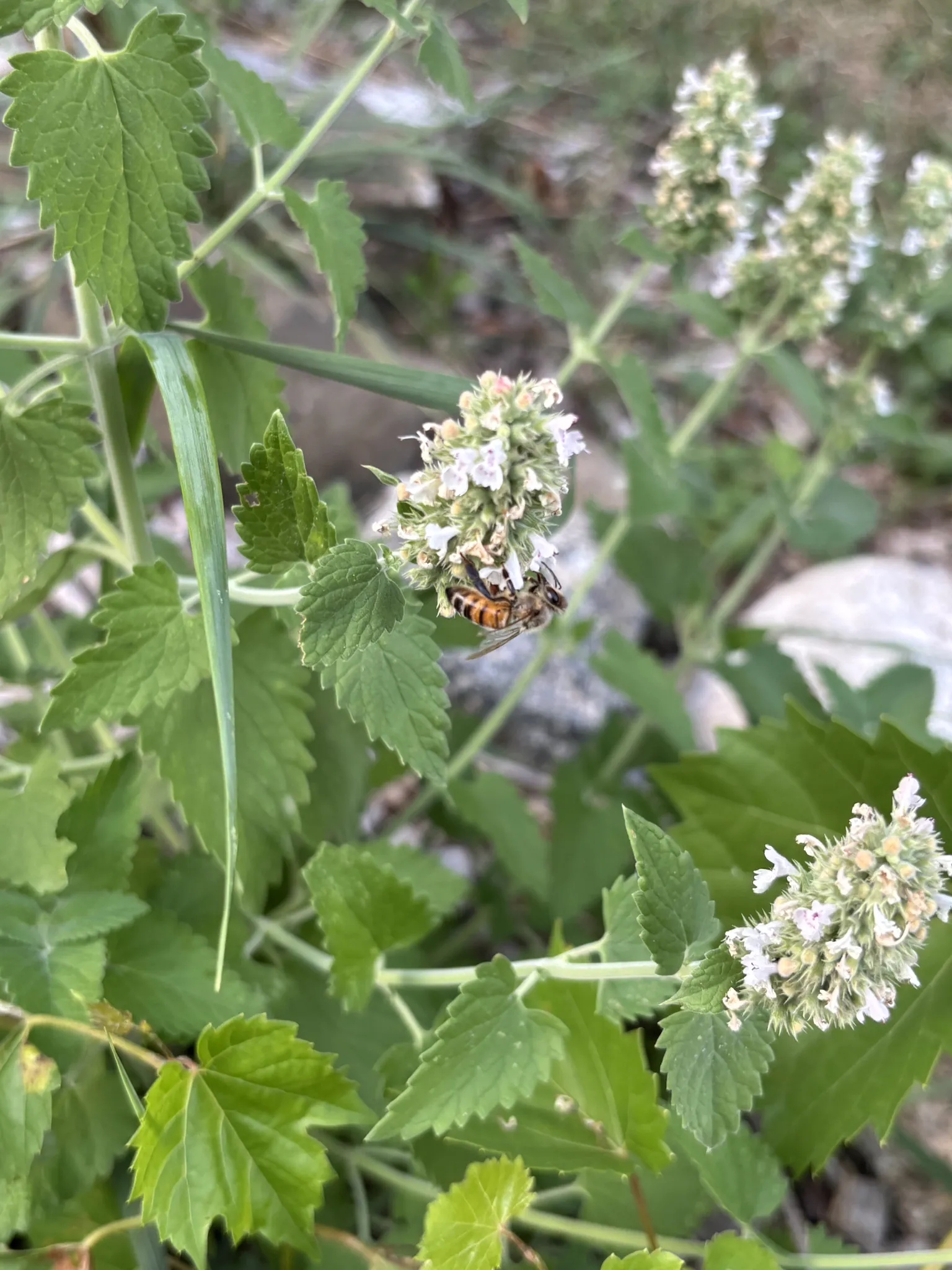
- Leaves are heart-shaped with toothed edges, soft and grey-green with fine hairs, and grow in pairs.
- Stems are square and fuzzy.
- The smell is strong and minty, with a skunky edge.
- Flowers are small and white with purple spots, in dense spikes at the tops of the stems in summer.
What it's good for
About two out of three cats react to nepetalactone, the oil in the leaves. They roll, rub and play for about ten minutes and then lose interest for a while.
For people, a mild tea of the leaves and flowers is an old remedy for restlessness, trouble sleeping and an upset stomach. Nepetalactone also repels mosquitoes surprisingly well in lab tests.
Don't confuse it with
Motherwort often grows nearby. Its leaves are deeply cut into pointed lobes, and its flowers are pink and sit in rings around the stem, not in a spike at the top.
Gallery
Honeybee visiting a flower spike White flowers with purple spots on a flower spike Grey-green, toothed leaves and a flower spike Flower spike with small, pale flowers
Where it grows
Each hexagon shows how many times Catnip has been recorded there, from herbarium specimens, surveys and iNaturalist photos. Gaps can mean nobody has looked, not that the plant is absent.