Burdock
Family: Asteraceae - Genus: Arctium - Species: A. lappa
Other names: Beggar’s Buttons, Lappa, Thorny Burr
Quick facts
- Uses
- Edible
- Medicinal
- Tea
- Edible parts
- root, stem, leaf
- Type
- biennial herb
- Flowers
- Jul–Sep
- Height
- Up to 2 m
- Native to
- Europe and Asia
- Habitat
- roadsides, field edges, disturbed ground
| Month | Observations |
|---|---|
| January | 0 |
| February | 0 |
| March | 0 |
| April | 0 |
| May | 0 |
| June | 13 |
| July | 195 |
| August | 139 |
| September | 20 |
| October | 4 |
| November | 2 |
| December | 0 |
Anyone who has walked a dog through a field in autumn knows burdock. Its burrs grip fur and clothing so well that they inspired the invention of Velcro.
Burdock takes two years to finish its life. In the first year it grows a big rosette of leaves close to the ground. In the second year it shoots up to 2 m, flowers and makes all those burrs.
How to spot it
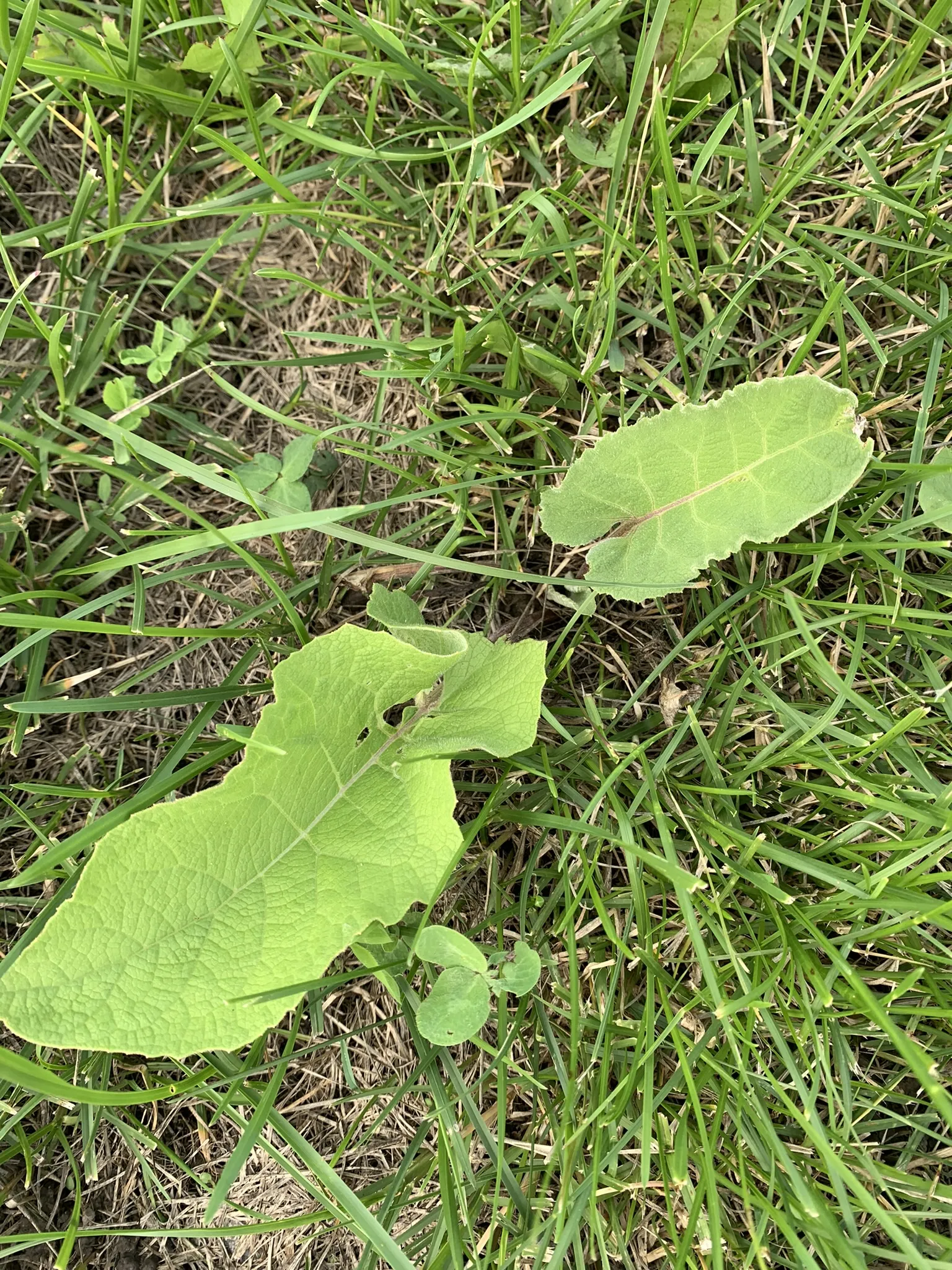
- Leaves are huge, up to 60 cm, heart-shaped and wavy. They're dull green on top and woolly and white underneath.
- Leaf stalks on great burdock are solid and grooved. Common burdock, a smaller relative, has hollow ones.
- Flowers are purple puffs, like small thistles, wrapped in hooked green bracts.
- The root is a long taproot with brown skin and white flesh.
What it's good for
The root is a proper vegetable. In Japan it's called gobo and sold in shops. Dig first-year roots in autumn or early spring, peel them, slice them thin and add them to stir-fries or soups. It's earthy and a little sweet. Fair warning: the roots go deep and digging them up is hard work.
In the second spring, cut the flower stalk before it blooms and peel it. The inside tastes a bit like artichoke.
Herbalists use the root to support the liver and to clear up skin problems like acne and eczema. The research is thin, but people have used it this way for a very long time.
Don't confuse it with
Young burdock leaves look a little like rhubarb and foxglove leaves, and both of those are toxic. Turn the leaf over: burdock is white and woolly underneath.
Gallery
First-year leaves in grass Second-year plant forming flower buds Large, wavy-edged leaves
Where it grows
Each hexagon shows how many times Burdock has been recorded there, from herbarium specimens, surveys and iNaturalist photos. Gaps can mean nobody has looked, not that the plant is absent.