Black Medic
Family: Fabaceae - Genus: Medicago - Species: M. lupulina
Other names: Black Medick, Hop Clover, Yellow Trefoil
Quick facts
- Uses
- Wildlife
- Soil builder
- Edible parts
- None
- Type
- annual herb
- Flowers
- Feb–Sep
- Height
- 15–45 cm
- Native to
- Europe and Asia
- Habitat
- lawns, roadsides, dry fields
| Month | Observations |
|---|---|
| January | 63 |
| February | 157 |
| March | 258 |
| April | 405 |
| May | 949 |
| June | 1255 |
| July | 547 |
| August | 307 |
| September | 210 |
| October | 95 |
| November | 53 |
| December | 27 |
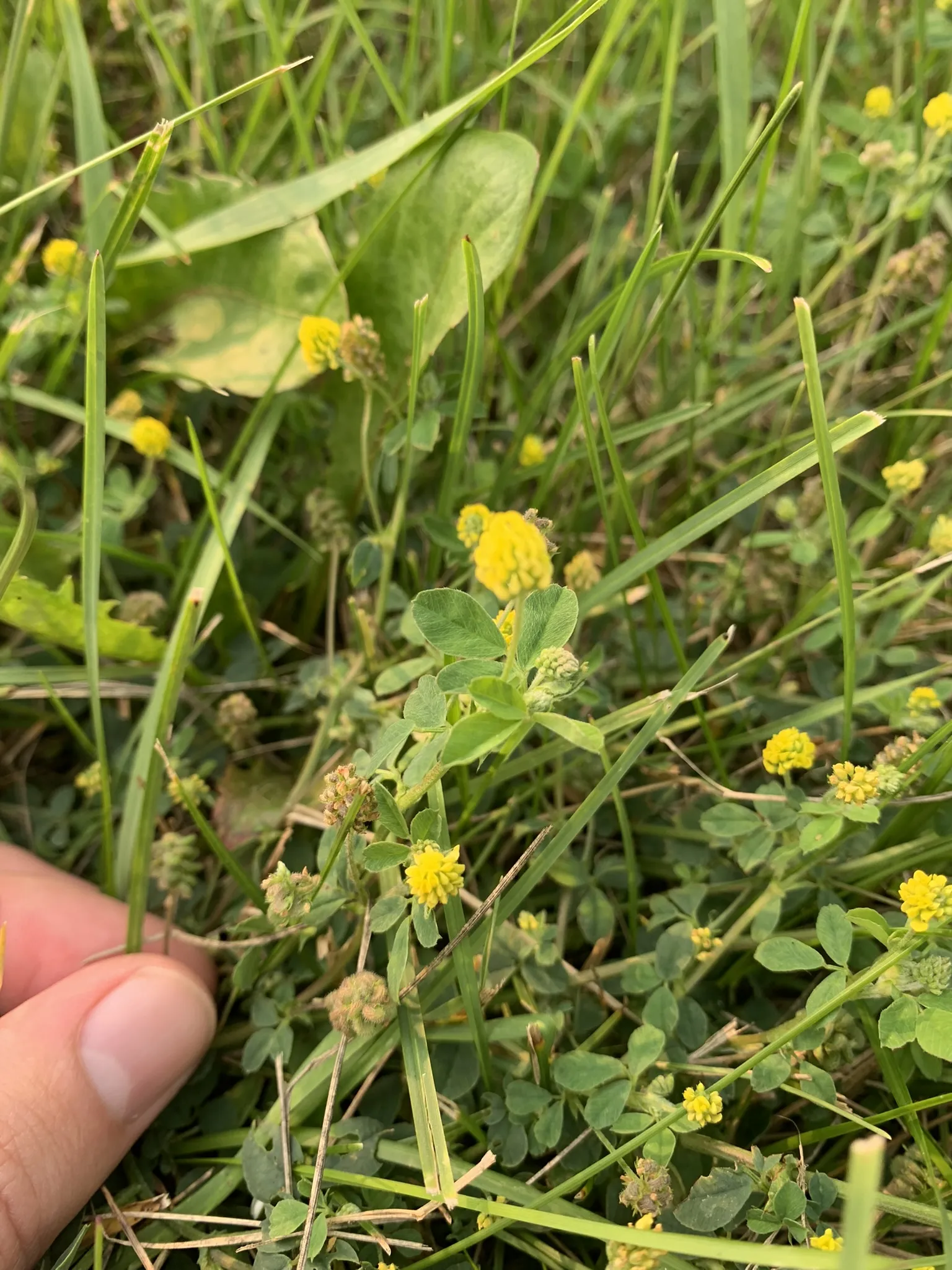
Black medic is the little yellow-flowered plant that most people walk past and assume is a clover. It's in the same family, but it's a different plant. Look at the seed pods: they turn black as they ripen, which is where the name comes from.
You'll find it in lawns, on gravel paths and in dry, poor soil where little else will grow.
How to spot it
- Leaves have three oval leaflets like a clover. Look closely and the middle one sits on its own short stalk, and each leaflet ends in a tiny point.
- Flowers are bright yellow, packed into tight, round heads about the size of a pea.
- Seed pods are small, curled and turn black when ripe.
- It grows low and spreading, often forming a loose mat.
What it's good for
Mostly for the soil and the bees. It fixes nitrogen like other legumes and gives bees something to visit in places that look barren. Farmers sometimes value it as grazing for livestock. People don't usually eat it.
Don't confuse it with
Hop clovers have similar yellow heads. Their dead flowers stay on the head and turn brown, making it look like a tiny hop. Black medic leaflets have that small point at the tip; hop clover leaflets don't.
Gallery
Small yellow flower heads and three-part leaves
Where it grows
Each hexagon shows how many times Black Medic has been recorded there, from herbarium specimens, surveys and iNaturalist photos. Gaps can mean nobody has looked, not that the plant is absent.