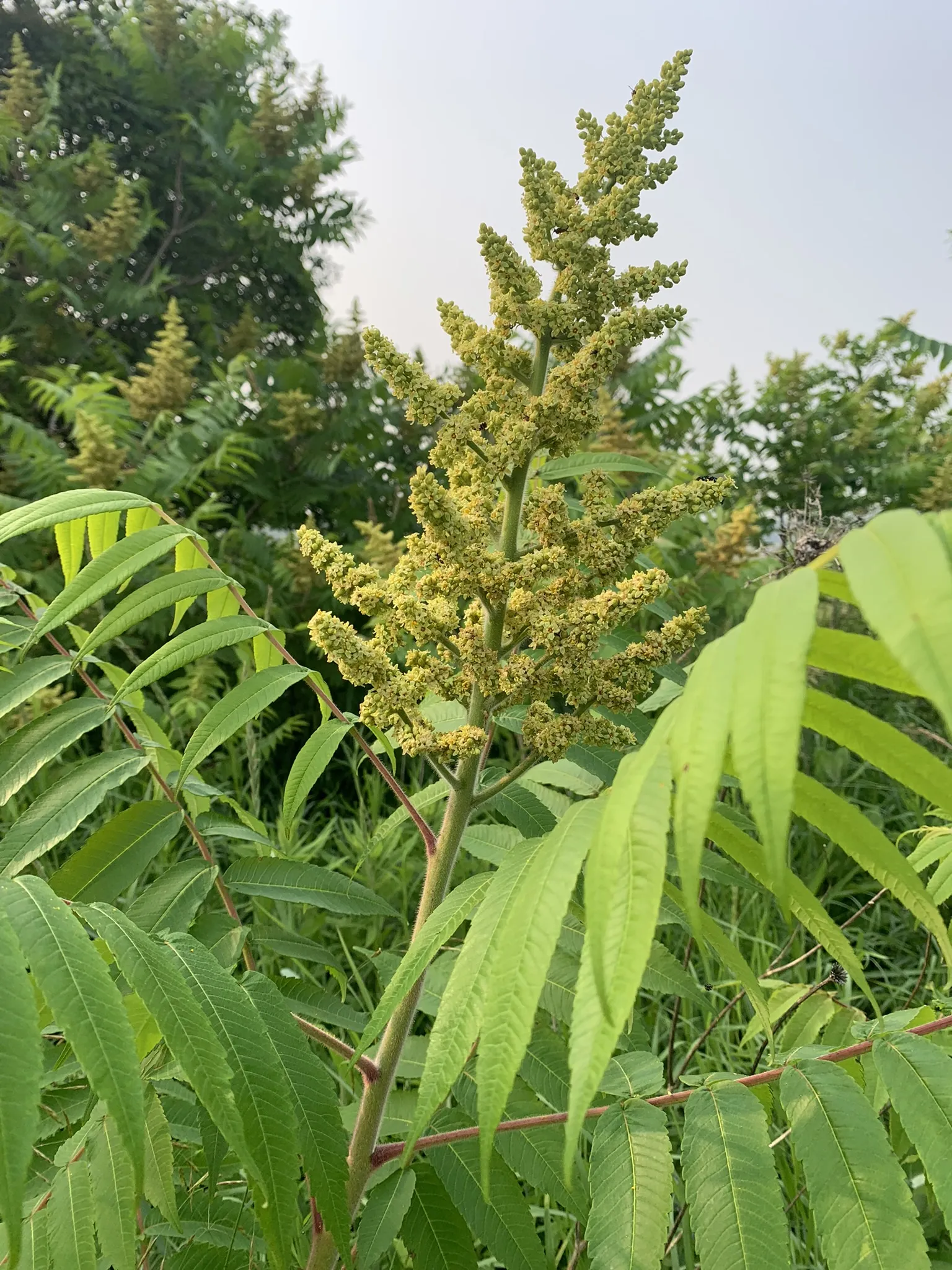
Sumac
Family: Anacardiaceae - Genus: Rhus - Species: R. typhina
Other names: Staghorn Sumac, Velvet Sumac
Quick facts
- Uses
- Edible
- Tea
- Wildlife
- Edible parts
- fruit
- Type
- perennial shrub
- Flowers
- Jun–Aug
- Height
- 3–6 m
- Native to
- Eastern North America
- Habitat
- field edges, roadsides, open woods
| Month | Observations |
|---|---|
| January | 3 |
| February | 1 |
| March | 8 |
| April | 16 |
| May | 61 |
| June | 741 |
| July | 431 |
| August | 107 |
| September | 59 |
| October | 26 |
| November | 8 |
| December | 3 |
Staghorn sumac is a native shrub that forms thickets along roadsides and field edges across eastern North America. In autumn its leaves turn brilliant red and orange, and it's one of the brightest sights of the season.
The name comes from its young branches. They're covered in soft, brown fuzz, like a deer's antlers in velvet.
How to spot it
- Leaves are long and feathery, made of 11 to 31 narrow, toothed leaflets.
- Branches are thick and fuzzy.
- Flowers are dense, upright cones of small yellow-green flowers in early summer.
- Fruit forms upright, cone-shaped clusters of fuzzy, dark red berries from late summer. They hang on through the winter.
What it's good for
The berries make a refreshing drink often called sumac-ade. Soak a few clusters in cold water for an hour or so, rub them to release the flavour, then strain it through a cloth. It tastes tart and lemony. Use cold water, not hot, or it turns bitter.
The tangy red spice used in Middle Eastern cooking comes from a Mediterranean relative. You can dry and grind staghorn sumac berries in the same way.
Birds rely on the berries in late winter, when there's little else left to eat.
Don't confuse it with poison sumac
Poison sumac causes a rash like poison ivy. It's easy to tell apart:
- Poison sumac has smooth-edged leaflets and white berries that hang down. It grows in swamps and wet ground.
- Edible sumacs have toothed leaflets and red berries that point up. They grow in dry, open places.
Gallery
Upright cluster of yellow-green flowers Pinnate leaves and flower clusters Close-up of a flower cluster
Where it grows
Each hexagon shows how many times Sumac has been recorded there, from herbarium specimens, surveys and iNaturalist photos. Gaps can mean nobody has looked, not that the plant is absent.